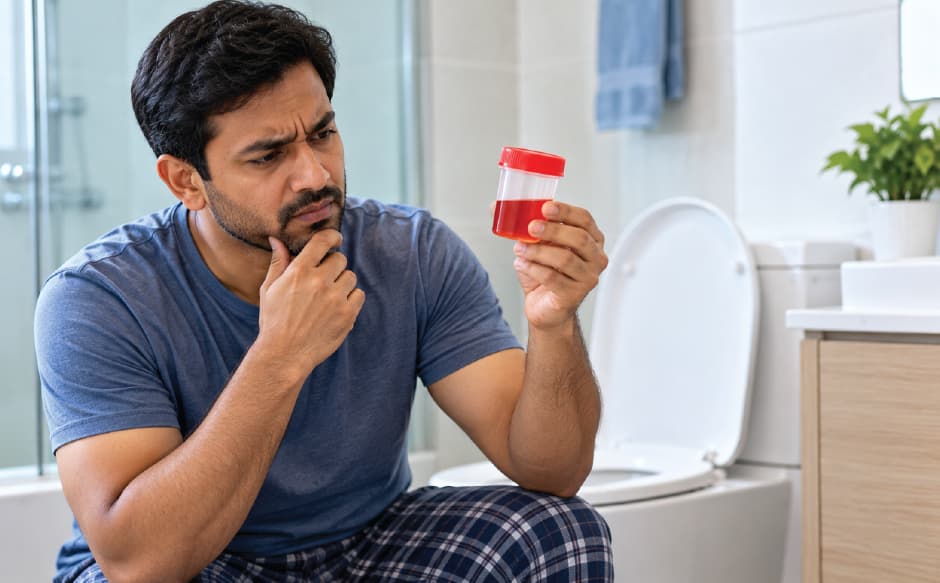

Urinary tract infections (UTIs) are among the most common bacterial infections, affecting millions of people each year, particularly women. While UTIs are treatable, prevention is always better than seeking cure.
The habits that prevent a first infection are largely the same ones that prevent the second, third, and tenth, but only if they're applied correctly and paired with medical follow-up when infections keep returning.
This guide walks through what actually causes a UTI, which prevention habits are backed by evidence rather than internet folklore, how to tell if you're dealing with a recurrent infection, and when it's time to see a urologist rather than self-treat again.
Understanding your risk factors and adopting simple daily habits can significantly reduce your chances of developing a painful infection and protect your long-term urinary health.
What Are Urinary Tract Infections
A urinary tract infection occurs when bacteria enter the urinary system, which includes the kidneys, ureters, bladder, and urethra. These infections can affect any part of the system, though most commonly they develop in the bladder (cystitis) or urethra (urethritis).
UTIs often cause painful or burning urination, frequent urges to urinate, cloudy urine, and lower abdominal discomfort. While anyone can develop a UTI, women are at higher risk because of their anatomy, the shorter distance between the urethra and anus makes it easier for bacteria to travel into the urinary tract.
Understanding what a UTI is and recognizing early UTI symptoms helps you take preventive action before infection takes hold.
Who Is Most at Risk of a UTI?
1. Women vs. Men
Beyond the shorter urethra, hormonal shifts, sexual activity, and pregnancy all add to the risk women carry. Men's risk rises later in life, largely tied to prostate enlargement, which can obstruct normal urine flow.
2. Age, Menopause & Hormonal Shifts
After menopause, falling estrogen changes the vaginal microbiome and thins the urinary tract lining, making it easier for bacteria to take hold. Harvard Health also points out that a family history of recurrent UTIs, particularly in a mother or sister, is an independent risk factor, suggesting a genetic component in how the bladder lining resists bacteria.
3. Diabetes, Catheters & Weakened Immunity
Poorly controlled diabetes raises glucose levels in urine, which bacteria feed on. Catheter use bypasses the body's natural defences entirely, and any condition that weakens immune response, from steroid use to chemotherapy, reduces the body's ability to clear bacteria before they establish an infection.
12 Everyday Habits That Actually Prevent UTIs
These habits are grouped by category rather than listed as a generic checklist, because the reasoning behind each one differs, and understanding the 'why' is what makes people actually stick with them.
| Category | Habit | Why It Works |
|---|---|---|
| Hydration & Voiding | Drink 2–3 litres of water daily | Dilutes urine and increases flushing frequency, reducing bacterial contact time with the bladder wall |
| Hydration & Voiding | Urinate as soon as you feel the urge | Holding urine lets bacteria multiply in stagnant urine |
| Hydration & Voiding | Empty your bladder fully each time | Incomplete emptying leaves residual urine where bacteria can grow |
| Sexual Activity | Urinate within 15–20 minutes after sex | Flushes out bacteria pushed toward the urethra during intercourse |
| Sexual Activity | Avoid spermicide-based contraception | Spermicides disrupt protective vaginal bacteria (lactobacilli) |
| Sexual Activity | Wash the genital area gently before sex | Reduces bacterial load near the urethral opening |
| Hygiene & Clothing | Wipe front to back after using the toilet | Prevents transferring rectal bacteria toward the urethra |
| Hygiene & Clothing | Choose cotton underwear over synthetic fabric | Reduces moisture build-up that supports bacterial growth |
| Hygiene & Clothing | Avoid scented washes, douches and sprays | These irritate the urethra and disrupt protective flora |
| Diet & Lifestyle | Limit bladder irritants (caffeine, alcohol, spicy food) during flare-ups | Irritants can worsen symptoms even if they don't directly cause infection |
| Diet & Lifestyle | Include vitamin-C-rich foods | May help acidify urine slightly, creating a less bacteria-friendly environment |
| Diet & Lifestyle | Don't self-medicate with leftover antibiotics | Incomplete or mismatched antibiotic courses drive resistance and mask recurring infections |


Does Diet Really Prevent UTIs? What the Research Actually Shows
Cranberry and D-mannose are the two remedies patients ask about most, and the honest answer is that the evidence is mixed, not conclusive. Mayo Clinic Health System notes that cranberry supplements haven't been shown in studies to prevent UTIs, though there is a plausible biological mechanism (compounds that may stop bacteria from sticking to the bladder wall).
| Remedy | What the Evidence Shows | Verdict |
|---|---|---|
| Cranberry (juice/supplement) | No proven prevention effect in clinical studies; plausible mechanism only | Optional, not a substitute for medical care |
| D-mannose | 2025 meta-analysis of 3 RCTs (846 participants) found no significant benefit over placebo | Weak evidence, don't rely on it alone |
| Vitamin C-rich foods | May modestly acidify urine; limited standalone trial data | Reasonable dietary addition, not a cure |
| Probiotics (lactobacillus) | Emerging evidence for restoring vaginal flora, especially post-antibiotic | Promising, best used alongside other habits |
| Vaginal oestrogen (postmenopausal) | Reduces recurrence by restoring vaginal pH and flora after menopause | Evidence-backed, prescription only |
UTI Prevention by Life Stage
The best prevention strategy depends on the life stage and underlying risk factors. The table below highlights the key risks and practical prevention measures for each group:
| Life Stage | Added Risk Factor | Prevention Focus |
|---|---|---|
| Pregnancy | Hormonal and physical changes slow urine flow | Regular prenatal urine screening; prompt treatment of even symptomless bacteria in urine |
| Menopause | Falling oestrogen thins urinary tract lining | Discuss vaginal oestrogen therapy; maintain hydration and voiding habits |
| Diabetes | Higher urine glucose feeds bacterial growth | Blood sugar control alongside standard prevention habits; faster medical follow-up on symptoms |
| Elderly / Catheter Use | Reduced bladder sensation and mobility; catheters bypass natural defences | Scheduled voiding, catheter hygiene protocols, and closer monitoring for atypical symptoms like confusion or fatigue |
When to See a Doctor: Red Flag Symptoms
Most UTIs are uncomfortable but not dangerous if treated early. See a doctor the same day, rather than waiting it out, if you notice any of the following:
-
Fever, chills, or back/flank pain (possible sign of a kidney infection)
-
Visible blood in the urine
-
Symptoms lasting more than 2–3 days despite home care
-
Two or more UTIs within six months, or three within a year
-
UTI symptoms during pregnancy, even mild ones need prompt evaluation
-
Nausea, vomiting, or confusion alongside urinary symptoms (especially in elderly patients)
Rameswara Nursing Home: Urology & Nephro Care for UTI Prevention and Recurrent Infections in Kolkata
For patients in and around Kolkata whose UTIs keep returning despite following the habits above, Rameswara Nursing Home runs a dedicated Urology & Nephro department built specifically for this kind of investigative, follow-up-heavy care.
-
NABH-accredited, 50-bed hospital located at P-155 C.I.T. Scheme-VII M, Ultadanga, near P.C. Chandra (HUDCO More), Kolkata 700054
-
Urology & Nephro department with 11+ senior consultants, including Dr. Kaushik Chandra Mullick, Dr. Nabankar Ghosh, Dr. Priyatosh Dey, Dr. P. S. Mukherjee, Dr. Sanjoy Dasgupta, and Dr. Sandeep Gupta
-
In-house diagnostics, USG-KUB, pathology (including urine culture), and digital X-ray, so a suspected recurrent UTI can be investigated in one visit instead of being referred to outside labs
-
A dedicated dialysis unit for patients whose UTIs are complicated by kidney involvement or chronic kidney disease
-
A structured 5-step care pathway, consultation, assessment, diagnostics, treatment, and follow-up, so recurrence isn't just treated once and forgotten
-
Cashless insurance and TPA empanelment, which matters for patients who need repeated visits and cultures rather than a single consultation.
This combination, accredited infrastructure, a large enough urology team to avoid long waits, and diagnostics under one roof, is what turns 'prevent this from coming back' from an internet checklist into an actual, trackable treatment plan.
Chat with our care assistant or get in touch with Rameswara Nursing Home's Urology & Nephro team to book a consultation and discuss diagnostics for recurrent UTIs.
Medical Disclaimer: This article is for general informational purposes only and does not constitute medical advice, diagnosis, or treatment. Always consult a qualified healthcare provider regarding any medical condition or before making changes to your care routine. In case of a medical emergency, contact your nearest hospital immediately.