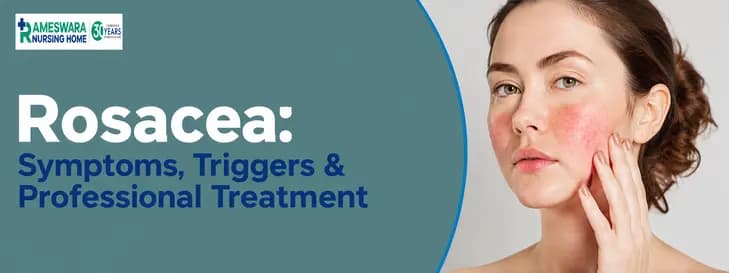

Rosacea is a common chronic skin condition that causes persistent facial redness, visible blood vessels, and sometimes small acne-like bumps. If your cheeks, nose, forehead, or chin frequently flush or feel warm, you may be experiencing rosacea.
Understanding your symptoms, identifying personal triggers, and seeking professional dermatological care can help you manage this condition effectively and improve your skin health.
This guide walks through what rosacea actually is, how to recognise its four subtypes, the everyday triggers that make it worse, and the professional treatment routes dermatologists actually recommend, so you know what “normal” skin sensitivity looks like versus a condition that needs a treatment plan.
What Is Rosacea?
Rosacea is a chronic inflammatory skin condition that mainly affects the central face, the nose, cheeks, chin, and forehead. It typically develops in adults between 30 and 60 years of age and is more frequently diagnosed in women, though men often experience more severe thickening-related symptoms.
Unlike acne, rosacea rarely produces blackheads or whiteheads. Unlike a sunburn or an allergic reaction, the redness in rosacea doesn’t fully resolve, it tends to return, spread, and intensify with repeated flare-ups over time. Left unmanaged, the underlying blood vessels can stay permanently dilated, which is why dermatologists emphasise early intervention: the condition can be controlled effectively, but it currently has no outright cure.
The Four Recognised Subtypes of Rosacea
Dermatologists classify rosacea into four subtypes based on the dominant signs a patient presents with. It’s common to have overlapping features from more than one subtype at the same time.
| Subtype | Common Name | Key Signs | Who It Typically Affects |
|---|---|---|---|
| Subtype 1 | Erythematotelangiectatic rosacea | Persistent facial redness, visible blood vessels, flushing | Often the earliest presentation |
| Subtype 2 | Papulopustular rosacea | Red bumps and pus-filled pimples, often mistaken for adult acne | Frequently seen in women 30–50 |
| Subtype 3 | Phymatous rosacea | Thickened skin, enlarged pores, nose tissue overgrowth (rhinophyma) | More common and more visible in men |
| Subtype 4 | Ocular rosacea | Dry, irritated, gritty-feeling or watery eyes, red eyelid margins | Can occur with or without visible facial signs |
Symptoms of Rosacea: What to Actually Look For
Rosacea rarely appears overnight. It often starts with occasional flushing before progressing to persistent redness, visible blood vessels, and acne-like bumps. Recognising these symptoms early can help you seek treatment before the condition becomes more difficult to manage.
Early or Mild Signs
- Frequent flushing or blushing that lasts longer than a typical blush
- A warm, stinging, or tight sensation across the cheeks and nose
- Redness that comes and goes but gradually starts lasting longer each time
Moderate Signs
- Persistent redness that no longer fully fades
- Small, visible thread-like blood vessels (telangiectasia)
- Red or pus-filled bumps without the blackheads typical of acne
- Skin that feels rough or slightly swollen in the affected areas
Advanced Signs
- Thickened, bumpy skin texture, most often on the nose
- Eye-related symptoms, dryness, grittiness, light sensitivity, or eyelid inflammation
- Skin that stays permanently discoloured even between flare-ups
What Triggers Rosacea Flare-Ups?
Triggers are individual, what sets off a flare in one person may not affect another at all. That’s precisely why dermatologists ask patients to identify their own personal trigger list rather than follow a generic avoidance sheet.
However, the following table outlines the most frequent triggers and why they can worsen symptoms.
| Trigger Category | Common Examples | Why It Happens |
|---|---|---|
| Dietary | Spicy food, hot beverages, alcohol (especially red wine) | Temporarily dilates facial blood vessels |
| Environmental | Direct sun exposure, wind, extreme heat or cold | Irritates already-sensitised skin and vessels |
| Emotional | Stress, anxiety, embarrassment | Triggers a vascular flushing response |
| Skincare & Cosmetic | Alcohol-based toners, physical scrubs, fragranced products, wool fabric near the face | Disrupts the skin barrier, causing irritation |
| Physical exertion | Intense exercise, hot showers, saunas | Raises facial temperature and blood flow |
Rather than eliminating everything at once, note the time, what you ate, drank, or applied, and the flare’s onset within the following 2–4 hours, for two to three weeks. Patterns usually become obvious well before the log is “complete” and this single habit is often what turns a vague self-diagnosis into a plan a dermatologist can actually work with.


Professional Treatment Options for Rosacea
There is no permanent cure, but a well-matched treatment plan controls flare-ups, slows progression, and in most patients keeps the skin visibly calmer within weeks.
| Treatment Type | Examples | Best Suited For | Typical Timeline |
|---|---|---|---|
| Topical medication | Metronidazole, azelaic acid, ivermectin cream | Mild-to-moderate redness, bumps | 4–8 weeks for visible improvement |
| Oral medication | Low-dose doxycycline (anti-inflammatory, not antibiotic dosing) | Papulopustular rosacea, moderate inflammation | 6–12 weeks |
| Laser / IPL (Intense Pulsed Light) therapy | Vascular laser, IPL sessions | Visible blood vessels, persistent flushing | Multiple sessions, spaced weeks apart |
| Procedural correction | Electrocautery, surgical reshaping | Phymatous changes (thickened nose/skin tissue) | Case-dependent |
| Ocular treatment | Lid hygiene, lubricating drops, oral therapy | Ocular rosacea | Ongoing management |
A dermatologist typically combines one topical or oral option with a trigger-avoidance and skincare plan, treating rosacea as a condition to manage long-term rather than a rash to clear once.
Daily Skincare and Self-Care for Rosacea-Prone Skin
- Cleanse with a fragrance-free, non-foaming cleanser, no scrubbing.
- Use a broad-spectrum mineral sunscreen (zinc oxide or titanium dioxide) every single day, regardless of season.
- Skip physical exfoliants, alcohol-based toners, and strong retinoid concentrations unless directed by a dermatologist.
- Moisturise consistently to support the skin barrier, since barrier damage worsens sensitivity to every other trigger.
- Keep a simple flare log for the first month of any new treatment, so your dermatologist can fine-tune the plan based on real data, not memory.
Why Patients Choose Rameswara Nursing Home for Rosacea Care
Here’s the honest version of why this matters, not the brochure version: rosacea is a condition you’ll likely be managing for years, not weeks. That changes what actually matters in choosing where to get treated.
It’s less about one dramatic laser session and more about having a hospital where your dermatology consult, your prescription refills, your follow-up reviews, and, if something else comes up along the way your general medicine or eye-care needs are all under one roof, with doctors who already have your history in front of them.
That’s the practical reason Rameswara Nursing Home, a 40-bed, fully air-conditioned multi-specialty hospital in Ultadanga, Kolkata, has become a steady choice for patients managing chronic skin conditions like rosacea, both from across India and from NRI families who come back home for treatment they trust.
The hospital’s OPD consultants work across dermatology, internal medicine, and ophthalmology, which matters directly for rosacea patients who may need eye-related care alongside skin treatment. Consultations, diagnostics, and follow-ups are priced with the stated goal of keeping specialist-level care affordable rather than reserved for a few, a genuinely useful factor for a condition that needs repeat visits, not a one-time fix.
If you’re weighing where to get an accurate rosacea diagnosis and a realistic, sustainable treatment plan, it’s worth having a conversation with Rameswara Nursing Home’s dermatology OPD team before committing to a clinic purely on the strength of one procedure.
Chat with our assistant at the Rameswara Nursing Home to get quick guidance on your symptoms and book a dermatology OPD consultation.
Medical Disclaimer: This article is intended for general informational purposes only and does not constitute medical advice, diagnosis, or treatment. Rosacea symptoms can overlap with other skin and eye conditions, and only a qualified dermatologist can provide an accurate diagnosis and personalised treatment plan. Please consult a healthcare professional at Rameswara Nursing Home or a specialist near you before starting or changing any treatment.