
Urinary tract infections (UTIs) are one of the most common bacterial infections in women, affecting millions each year. If you're experiencing painful urination, urgency, or discomfort in your lower abdomen, you're not alone, and the good news is that UTIs are highly treatable.
This article breaks down exactly what early UTI symptoms feel like, which signs mean the infection may be moving toward the kidneys, what typically causes UTIs in women, and when it's time to stop waiting and get a urine test done.
What Is a UTI, and Why Are Women More Prone to It?
A urinary tract infection happens when bacteria, most often E. coli from the digestive tract, enter the urethra and travel into the bladder. It can stay localised as a bladder infection (cystitis) or, if untreated, climb further up into the kidneys (pyelonephritis), which is far more serious.
Women are anatomically more susceptible than men: the female urethra is shorter and sits closer to the rectum, which gives bacteria a much shorter distance to travel to reach the bladder. This single anatomical difference explains most of the gender gap in UTI rates.
Early UTI Symptoms in Women
Not every UTI announces itself loudly. Some women notice only one mild symptom for a day or two before it develops fully. Here's what to watch for.
1. Burning or Pain While Urinating (Dysuria)
A stinging or burning sensation each time you pass urine is usually the first and most recognisable sign. It happens because the infection irritates the lining of the urethra and bladder.
2. A Frequent, Urgent Need to Urinate
You may feel like you need to go every 20–30 minutes, even right after using the bathroom, often passing only a small amount each time. This urgency-with-low-volume pattern is a classic bladder infection sign.
3. Cloudy, Dark, or Strong-Smelling Urine
Bacteria and white blood cells fighting the infection can make urine look cloudy or unusually dark, and give it a sharper smell than normal.
4. Pelvic Pressure and Lower Abdominal Discomfort
A dull ache or pressure around the pubic bone, sometimes described as a "full bladder that won't empty" feeling, is common, particularly in women.
5. Blood in the Urine (Hematuria)
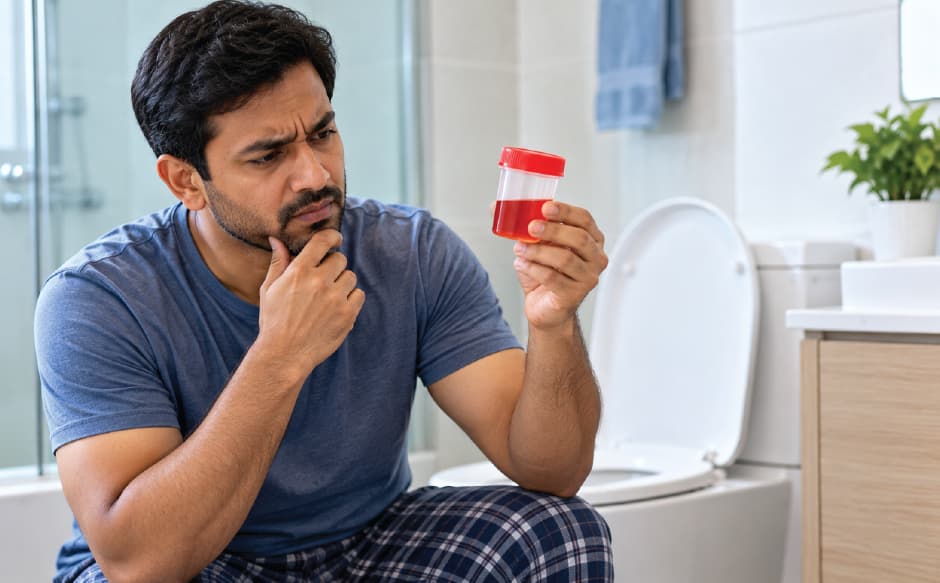
Urine that looks pink, red, or tea-coloured can happen when the infection irritates the bladder wall enough to cause minor bleeding. It's not always dangerous, but it should never be self-diagnosed, it needs a urine test to rule out other causes.
Warning Signs of a Kidney Infection; Don't Wait on These
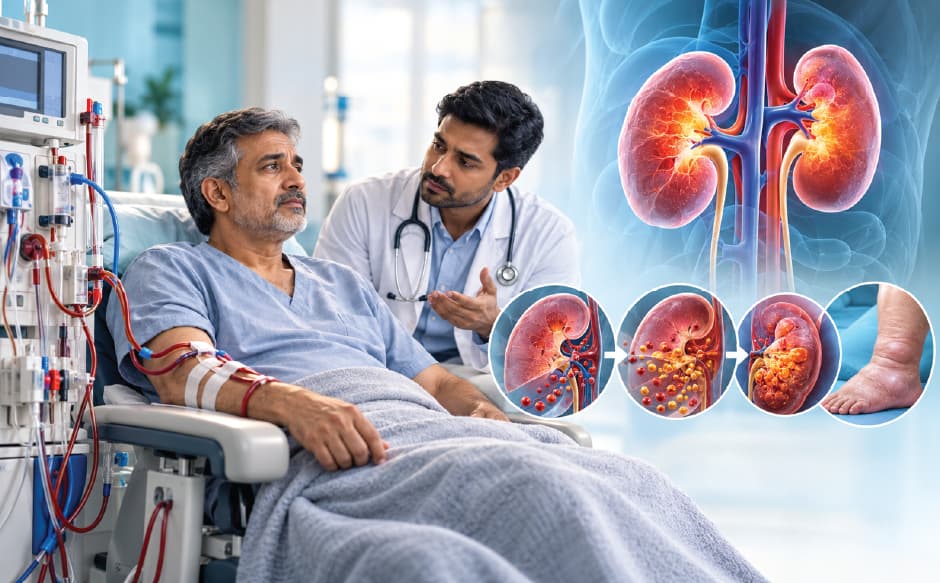
If bacteria travel up from the bladder to one or both kidneys, symptoms escalate and the situation becomes urgent. According to Mayo Clinic, red-flag signs include fever of 101°F (38.3°C) or higher, shaking chills, upper back or side (flank) pain, and nausea or vomiting.
Feeling suddenly weak, shaky, or feverish on top of typical UTI symptoms is a signal to get medical attention the same day, not "wait and see."
Symptom Snapshot: Bladder UTI vs Kidney Infection
Not all UTIs affect the same part of the urinary tract. This quick comparison can help you understand how bladder and kidney infections may differ:
| Symptom | Bladder Infection (Cystitis) | Kidney Infection (Pyelonephritis) |
|---|---|---|
| Pain location | Lower abdomen or pelvis | Upper back or side (flank) |
| Urination | Burning, frequent or urgent urination | Similar symptoms, sometimes with reduced urine output |
| Fever | Usually absent or mild | Often 101°F (38.3°C) or higher |
| Other signs | Cloudy urine and mild discomfort | Chills, nausea, vomiting and fatigue |
| When to seek care | See a doctor within 24–48 hours | Seek medical care the same day |


UTI Symptoms by Life Stage
UTI risk and presentation shift across different stages of a woman's life, which is why the same symptom checklist doesn't fit everyone equally.
| Life Stage | What's Different |
|---|---|
| Pregnancy | Hormonal and positional changes in the uterus raise UTI risk, and untreated infections are more likely to progress to a kidney infection, prompt testing matters more here. |
| Post-menopause | Falling oestrogen thins the vaginal and urethral lining, making infections more frequent and sometimes milder in presentation, so they're easier to miss. |
| Recurrent UTI (3+/year) | Often needs more than antibiotics, a root-cause workup for anatomical, hormonal, or catheter-related factors, ideally with imaging and culture-based testing. |
| Sexually active women | Intercourse can push bacteria toward the urethra; UTIs aren't sexually transmitted, but activity is a recognised trigger. |
When to See a Doctor: A Same-Day Checklist
Knowing when symptoms need medical attention can help prevent a simple UTI from progressing or recurring:
-
Burning or pain during urination lasting more than a day
-
Frequent urge to urinate with little output, especially if it's new for you
-
Cloudy, dark, or foul-smelling urine
-
Any visible blood in the urine
-
Fever, chills, nausea, or back/side pain, treat this as urgent, same-day care
-
You're pregnant and notice any urinary symptoms
-
This is your third or more UTI in the past 12 months
Preventing Recurrent UTIs
A few simple daily habits can help lower the risk of UTIs coming back, especially if you’re prone to repeated infections:
-
Drink enough water through the day, dilute urine is harder for bacteria to thrive in.
-
Urinate as soon as you feel the urge; avoid holding it for long stretches.
-
Wipe front to back after using the toilet.
-
Urinate shortly after sexual activity.
-
Avoid unnecessary use of spermicide-based contraception if you're prone to UTIs.
-
If infections keep recurring, ask for a culture-based workup instead of repeating the same antibiotic each time
Rameswara Nursing Home’s Approach to UTI & Urology Care
Rameswara Nursing Home, a NABH-accredited 50-bed hospital in Ultadanga, Kolkata, provides UTI and urinary tract care through its dedicated Urology & Nephrology department, supported by 11+ senior consultants. The hospital brings consultation, diagnostics and follow-up together under one roof, helping patients avoid delays between multiple clinics and laboratories.
What patients can expect:
-
Initial consultation and assessment: Symptoms, medical history and recurrence patterns are evaluated to identify uncomplicated or complicated UTIs.
-
In-house diagnostics: Urinalysis and urine culture are processed through the hospital’s pathology lab, while USG-KUB and digital X-ray are available when imaging is required.
-
Targeted treatment: Treatment is guided by clinical findings and, where appropriate, urine culture results rather than symptoms alone.
-
Follow-up care: Recurrent or complicated UTIs are monitored to confirm that the infection has cleared and to identify possible underlying urinary or kidney problems.
-
Support for complex cases: A dedicated dialysis unit and 8-bed ICU are available when urinary infections are associated with significant kidney complications.
With senior urology specialists, in-house diagnostics and cashless insurance/TPA facilities, Rameswara offers a coordinated approach to UTI and broader urological care for patients from Kolkata and beyond.
Book Your Urologist Appointment Online in Kolkata today!
Conclusion
Most UTIs in women start small, a bit of burning, a more frequent trip to the bathroom, and resolve quickly once they're diagnosed and treated properly. The real risk isn't the infection itself; it's waiting too long to get it checked, especially once fever, back pain, or chills enter the picture.
Knowing the early signs, understanding your own risk factors, and having a hospital nearby that can test, diagnose, and treat in a single visit, the way Rameswara Nursing Home's Urology & Nephrology department is set up to do, is what turns a UTI from a recurring worry into a manageable, short-term issue.
Chat with us to book a same-day consultation with Rameswara Nursing Home's Urology & Nephrology team in Kolkata.
Medical Disclaimer: This article is for general informational purposes only and is not a substitute for professional medical advice, diagnosis, or treatment. Always consult a qualified healthcare provider regarding any medical condition, symptoms, or before starting any treatment. If you are experiencing severe symptoms such as high fever, chills, or persistent pain, seek immediate medical attention.