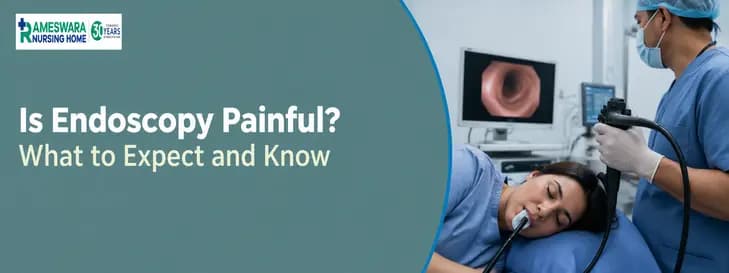

Endoscopy is often less painful than patients expect, thanks to modern sedation and expert technique. Most people describe the procedure as uncomfortable rather than painful, and many remember very little due to sedatives. If you're scheduled for an endoscopy or considering one, understanding what to expect can ease your anxiety and help you prepare properly.
What Is an Endoscopy? A Quick Refresher
An endoscopy, more precisely an upper gastrointestinal (GI) endoscopy or gastroscopy, is a diagnostic procedure in which a gastroenterologist passes a thin, flexible tube fitted with a camera (an endoscope) through the mouth into the oesophagus, stomach, and the first part of the small intestine (the duodenum).
It lets the doctor see, photograph, and biopsy the lining of the upper digestive tract in real time, without surgery. Doctors typically order it to investigate persistent acidity, unexplained weight loss, difficulty swallowing, unexplained anaemia, or blood in vomit or stool.
Endoscopy vs Colonoscopy: Are They Equally Uncomfortable?
People often use “endoscopy” loosely to mean any scope test, but an upper GI endoscopy (through the mouth) and a colonoscopy (through the rectum, examining the large intestine) are different procedures with different discomfort profiles.
An upper endoscopy usually takes just 5–15 minutes and involves the oesophagus and stomach, so most patients describe throat pressure or a brief gag reflex rather than pain.
A colonoscopy takes longer and requires inflating the colon with air, which is why most published pain-score data, including the figures above, comes from colonoscopy studies specifically. If your prescription simply says “endoscopy,” ask your gastroenterologist to confirm whether it means an upper GI scope or a colonoscopy, since prep and sedation options differ between the two.
Is Endoscopy Painful? The Direct Answer
No, a modern endoscopy is not designed to be painful, and most patients do not experience pain during the procedure itself. What you may feel instead is discomfort: pressure, fullness, or a brief urge to gag as the scope passes the back of the throat.
The lining of the oesophagus and stomach has far fewer pain receptors than skin, which is why even biopsies taken during the procedure are typically painless. Sedation and throat-numbing spray specifically target the gag reflex and anxiety response, the two biggest drivers of discomfort, not because the underlying procedure is inherently painful.
What You Might Feel Instead of Pain
-
A brief gag reflex as the scope passes the throat (lasts only seconds)
-
Pressure or bloating from the air used to inflate the stomach for a clear view
-
A mild sore throat for 24–48 hours afterward
-
Grogginess and mild fatigue if you opted for sedation
Sedation Options for Endoscopy in India: What to Expect and What It Costs
The type of sedation used can significantly affect how you experience an endoscopy, your recovery time, and the overall cost. The options commonly considered in India include:
| Sedation Type | What It Feels Like | Recovery Time | Typical Extra Cost in India |
|---|---|---|---|
| Throat spray only (local anaesthesia) | Awake, brief gag reflex, mild bloating | Immediate — can drive or work the same day | Usually included in the base fee |
| Conscious sedation (IV) | Drowsy, relaxed, little to no memory of the procedure | 30–60 minutes of observation; need a companion to go home | ₹1,500–₹3,500 add-on |
| Deep sedation / anaesthesia (complex or therapeutic cases) | Fully asleep | 1–2 hours of observation | Higher; anaesthesiologist fee applies |


What Happens Before, During, and After Your Endoscopy
Before: Fasting and Preparation
You’ll typically be asked to fast for 6–8 hours before an upper GI endoscopy and avoid clear liquids for 2–4 hours prior, so the stomach is empty enough for a clear view. Discuss blood thinners, aspirin, and antacids with your doctor 5–7 days in advance, since some need to be paused.
During: What You’ll Feel, Minute by Minute
You’ll be positioned on your side, a mouth guard placed, and throat spray applied (roughly 2 minutes). If you’ve chosen sedation, an IV is started and you’ll feel relaxed within a minute or two. As the scope is inserted, you may gag briefly for a few seconds. During the exam and any biopsy, usually 5–10 minutes total, most patients feel pressure or fullness only, not pain. The scope is then gently withdrawn.
After: Recovery Timeline
If sedated, you’ll be observed for 30–60 minutes until fully alert. Expect a mild sore throat or bloating for 24–48 hours. Visual findings are usually discussed the same day; biopsy results generally take a few days to return from the lab.
Who Is More Likely to Feel Discomfort During an Endoscopy?
Discomfort during an endoscopy can vary from person to person. Several factors, including anxiety, previous surgery, and the experience of the endoscopist, can influence how comfortable the procedure feels. Here’s what may make a difference:
| Factor | Effect on Discomfort |
|---|---|
| High pre-procedure anxiety | Significantly increases perceived pain and discomfort |
| Prior abdominal or pelvic surgery | Can affect scope passage and ease of the exam |
| First-time patients | Tend to report more anxiety-driven discomfort than repeat patients |
| Experience of the endoscopist | Directly reduces both procedure difficulty and reported pain |
| Informed choice of sedation type | Patients who choose their own sedation option report higher satisfaction |
7 First-Hand Tips to Make Your Endoscopy Easier
-
Ask specifically whether sedation is included or billed separately, so there’s no surprise at checkout.
-
Tell the endoscopist in advance if you have a strong gag reflex, they can adjust scope size and throat-spray timing accordingly.
-
Practice slow nasal breathing during scope insertion; panicked breathing tends to worsen the gag reflex.
-
Don’t skip the fasting instructions, a partially full stomach makes the exam harder and can prolong the procedure.
-
Arrange a companion if you’re choosing sedation; most centres will not discharge a sedated patient alone.
-
Ask whether biopsy results will be ready the same visit or need a follow-up, especially if you’re travelling from out of town.
-
If you’re anxious, say so upfront. Research consistently shows anxiety, not the scope itself, is the biggest driver of discomfort, and most gastroenterologists will adjust their approach once they know.
Why Rameswaram Healthcare Is a Practical Choice for Endoscopy in Kolkata
If you’re comparing where to get an endoscopy in Kolkata, the quality of the endoscopy team, monitoring facilities, and diagnostic support matters just as much as the procedure itself.
Rameswara Nursing Home, is a NABH-accredited 50-bed hospital in Ultadanga with in-house gastroenterology services. The department includes Dr. Debasis Datta, Dr. Deepak Shah, Dr. Soumik Kr. Majhi, and Dr. Subhodip Laskar, who perform upper GI endoscopy and colonoscopy.
What Makes the Endoscopy Unit Stand Out?
-
Dedicated gastroenterology team: Endoscopy and colonoscopy are performed in-house by senior consultants.
-
8-bedded ICU backup: Provides closer monitoring and immediate escalation if required, particularly for sedated patients.
-
In-house diagnostics: Pathology and liver-function testing are available on-site, helping streamline biopsy and related investigations.
-
USG under one roof: Abdominal ultrasound can be coordinated with endoscopy findings when clinically indicated.
-
Insurance & TPA support: Cashless treatment may be available for eligible policies, with the billing team able to explain expected costs beforehand.
For patients travelling from across India or abroad, having endoscopy, specialist consultation, monitoring, and supporting diagnostics within the same hospital can make the process simpler and more predictable.
Conclusion
Endoscopy has earned an intimidating reputation it doesn’t fully deserve. The clinical evidence is consistent: most patients feel little to no pain, real discomfort is usually limited to a brief gag reflex and mild post-procedure bloating or throat irritation, and severe pain is uncommon.
What changes the experience most isn’t the scope itself; it’s your anxiety level going in, whether you choose sedation, and the skill and equipment of the team performing it.
If you’re in or around Kolkata and need an upper GI endoscopy, colonoscopy, or a broader digestive health check-up, Rameswaram Healthcare’s in-house gastroenterology unit, ICU backup, and same-campus diagnostics are built to make that one visit as straightforward as possible.
Chat with our team or book a consultation with Rameswaram Healthcare’s gastroenterology department, we’ll walk you through the process, cost, and next steps before you decide anything.
Medical Disclaimer: This article is for general informational purposes only and does not constitute medical advice, diagnosis, or treatment. Pain and discomfort levels vary between individuals. Please consult a qualified gastroenterologist to discuss your specific symptoms, medical history, and the endoscopy or sedation approach best suited to you.