
Your kidneys naturally work less efficiently as you age, a process that begins around age 30 and accelerates after 60. This gradual decline affects how well your kidneys filter waste and regulate blood pressure, but understanding the process empowers you to take action. This guide explains why kidney function declines, what increases your risk, and practical steps you can take to protect your kidney health now and in the future.
What “Kidney Function Decline With Age” Actually Means
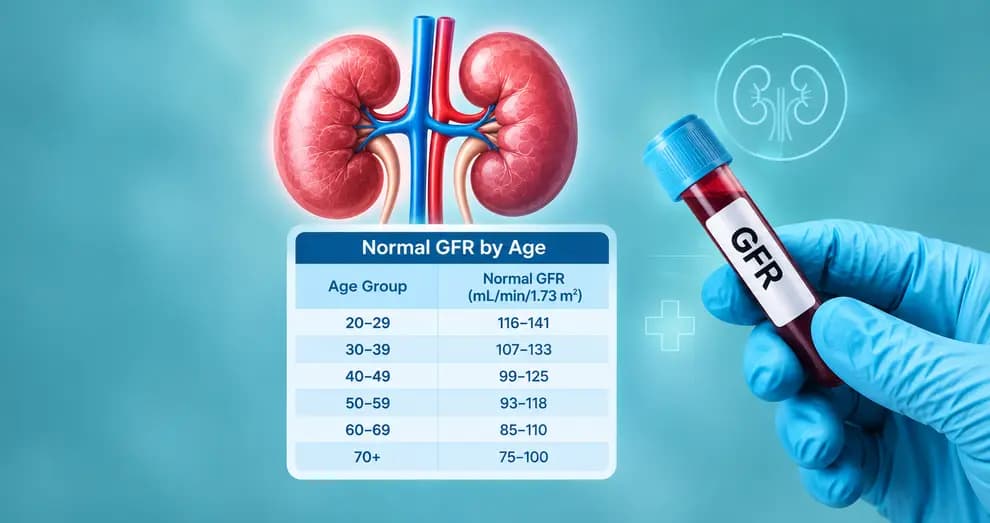
Your kidneys filter roughly 150 litres of blood a day, remove waste and excess fluid, balance electrolytes, help control blood pressure, trigger red blood cell production, and keep bones healthy through vitamin D activation. Kidney function is usually tracked through the estimated glomerular filtration rate (eGFR), a number derived from blood creatinine, age, and sex that estimates how much blood the kidneys filter each minute. Two very different processes can lower that number:
-
Physiological aging: A slow, universal loss of filtering capacity that happens even in people who never develop kidney disease.
-
Chronic kidney disease (CKD): A pathological process, usually driven by diabetes, hypertension, or another condition, that damages the kidneys faster and further than age alone would.
Both lower the same number on a lab report. Telling them apart is the whole point of this article.
Normal Age-Related Decline vs. Chronic Kidney Disease: How to Tell the Difference
A lower GFR reading by itself doesn't tell you which process is at work. Doctors look at the pattern over time, alongside other markers, to decide.
| Feature | Normal age-related decline | Chronic kidney disease (CKD) |
|---|---|---|
| Rate of GFR drop | ~8–10 mL/min per decade after 40 | Faster, or a sudden drop at any age |
| Protein in urine (ACR) | Usually normal | Often elevated |
| Symptoms | Typically none | May include swelling, fatigue, foamy urine |
| Underlying driver | Natural nephron loss over time | Diabetes, hypertension, infection, obstruction |
| Reversibility | Not reversible, but stable and expected | Sometimes slowed or partly improved if caught early |
| Diagnosis rule of thumb | GFR fits age-adjusted expected range | GFR below 60 for 3+ months, per UPMC/NIH guidance |
Warning Signs You Shouldn't Write Off as “Just Getting Older”
Here's the part that catches most people off guard: because healthy kidneys have significant reserve capacity. Most age-related decline doesn't make someone feel or function differently, until it's advanced. That's exactly why relying on symptoms alone is risky. Still, some signs are worth acting on rather than attributing to age:
- Persistent swelling in the ankles, feet, or around the eyes
- Foamy or unusually dark urine, or a marked change in how often you urinate
- Fatigue or weakness that doesn't improve with rest
- Loss of appetite, nausea, or a metallic taste
- Blood pressure that's suddenly harder to control
- Muscle cramps, persistent itching, or trouble concentrating
None of these confirm CKD on their own, but any of them, especially in combination, is a reason to ask for a kidney function test rather than wait for the next routine check-up.
What Speeds Up Kidney Aging (Risk Factors)
Age-related decline happens to nearly everyone, but the rate varies a lot, and a few conditions accelerate it sharply. Diabetes and hypertension are the dominant drivers:
| Risk factor | How it damages the kidneys | What helps |
|---|---|---|
| Diabetes | High blood sugar damages the tiny filtering vessels (diabetic nephropathy) | HbA1c control, annual urine ACR test |
| Hypertension | Forces kidneys to filter under constant high pressure | Home BP monitoring, medication adherence |
| Long-term NSAID/painkiller use | Reduces blood flow to the kidneys over time | Use only as prescribed; avoid daily self-medication |
| Chronic dehydration | Concentrates waste products, stresses filtering units | Consistent fluid intake, more so in summer/older age |
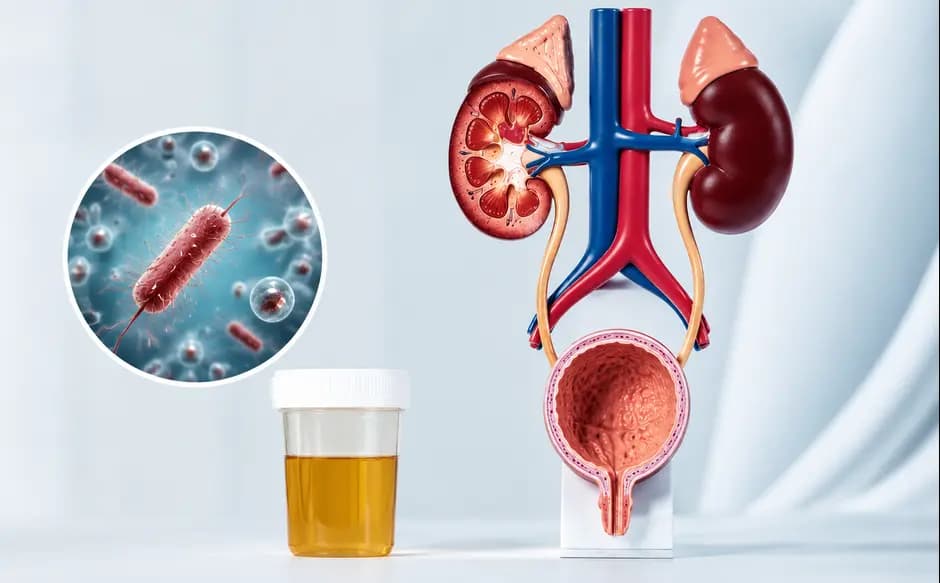
| Recurrent UTIs / obstruction | Can cause scarring with repeated infection | Prompt treatment; imaging if infections recur |
| Smoking | Accelerates vascular damage that reduces renal blood flow | Cessation support and monitoring |


How Doctors Diagnose Age-Related Kidney Decline
Diagnosis isn't a single test, it's a pattern read across a few simple, inexpensive checks:
- Kidney/Renal Function Test (KFT/RFT): measures creatinine, urea, electrolytes, and calculates eGFR. In Kolkata, this typically costs between ₹500 and ₹1,100 depending on the lab and panel size.
- Urine Albumin-to-Creatinine Ratio (ACR): checks for protein leakage, an early marker CKD screens catch before symptoms appear
- Ultrasound of the kidneys, ureters, and bladder (USG-KUB): rules out structural issues, cysts, or obstruction
- Blood pressure trend over multiple visits, not a single reading
Can You Slow Down Kidney Aging? Evidence-Based Steps
Kidney aging is a natural process, but certain lifestyle and health measures can help protect kidney function over time. Here are practical, evidence-based steps to support long-term kidney health:
| Action | Why it helps |
|---|---|
| Keep blood pressure under ~130/80 mmHg | Reduces mechanical stress on filtering vessels |
| Manage blood sugar if pre-diabetic or diabetic | Slows damage to small renal blood vessels |
| Stay consistently hydrated (without over-correcting) | Supports waste clearance without straining aging kidneys |
| Avoid daily, unsupervised NSAID or herbal-supplement use | Prevents drug-related reduction in renal blood flow |
| Get an annual KFT after age 40, sooner with risk factors | Catches a faster-than-expected decline while it's manageable |
| Limit added salt and moderate protein if advised | Eases the filtering workload on aging nephrons |
None of this reverses the structural changes of aging, no supplement or diet does. What it does is keep the decline on its expected, slow curve instead of letting a modifiable risk factor push it faster.
When to See a Nephrologist: Red Flags That Need Attention
- GFR has dropped by more than 5 points in a single year
- Persistent swelling, foamy urine, or visible blood in urine
- Blood pressure that's stopped responding to usual medication
- A family history of kidney failure combined with age over 50
- Known diabetes or hypertension with no kidney screening in the past year
Common Mistakes People Make About Aging and Kidney Health
- Assuming fatigue or ankle swelling is “just age” without a KFT to confirm it
- Self-medicating with over-the-counter painkillers for chronic joint or back pain
- Skipping annual kidney screening after 40 despite a family history of diabetes or hypertension
- Over-restricting water intake without medical guidance, which can be as harmful as under-hydrating
- Treating a single low GFR reading as a final diagnosis instead of asking for a repeat test.
Inside Rameswara Nursing Home's Approach to Age-Related Kidney Care
Rameswara Nursing Home, is a NABH-accredited, 50-bed hospital in Ultadanga, Kolkata, with more than 80 specialist consultants on its panel. Its Urology & Nephrology department includes six senior consultants, Dr. Kaushik Chandra Mullick, Dr. Nabankar Ghosh, Dr. Priyatosh Dey, Dr. P. S. Mukherjee, Dr. Sanjoy Dasgupta, and Dr. Sandeep Gupta, supported by a dedicated in-house dialysis unit. A typical evaluation for suspected age-related kidney decline follows five steps:
1. Consultation: History of blood pressure, diabetes, medication use, and family history 2. Assessment: Physical examination and review of any prior lab reports 3. Diagnostics: KFT, urine ACR, and USG-KUB, all processed in-house through the hospital's own pathology lab and digital X-ray unit, so results are usually available the same day 4. Treatment: A plan tailored to whether the finding is normal-range aging (monitoring) or early CKD (risk-factor control, medication, or referral for further management) 5. Follow-up: Repeat testing at an interval based on the trend, not a fixed calendar date
Because the diagnostic loop sits under one roof, consultation, lab, imaging, and the dialysis unit if it's ever needed, patients aren't sent across the city between appointments just to piece together a single kidney-health picture.
Conclusion
Kidney function declining with age is normal, expected, even. What decides whether that decline stays a quiet, manageable part of aging or turns into chronic kidney disease is largely how early it's tracked and how well diabetes, blood pressure, and hydration are managed along the way.
A GFR reading on its own rarely tells the full story; the trend over time does. If you're in Kolkata, or coordinating care for a parent or relative from elsewhere in India or abroad, Rameswara Nursing Home's Urology & Nephrology team can help interpret that trend properly, through same-day diagnostics, a five-step care pathway, and a nephrologist who looks at the pattern, not just a single number on a report.
Chat with our care assistant for guidance on kidney function tests, nephrology consultation slots, or dialysis scheduling at Rameswara Nursing Home.
Medical Disclaimer: This article is for general informational purposes only and does not replace professional medical advice, diagnosis, or treatment. Kidney function, GFR ranges, and CKD risk vary by individual and depend on factors not covered in a general article. Always consult a qualified nephrologist or physician for interpretation of your own test results and before starting, stopping, or changing any treatment or medication.