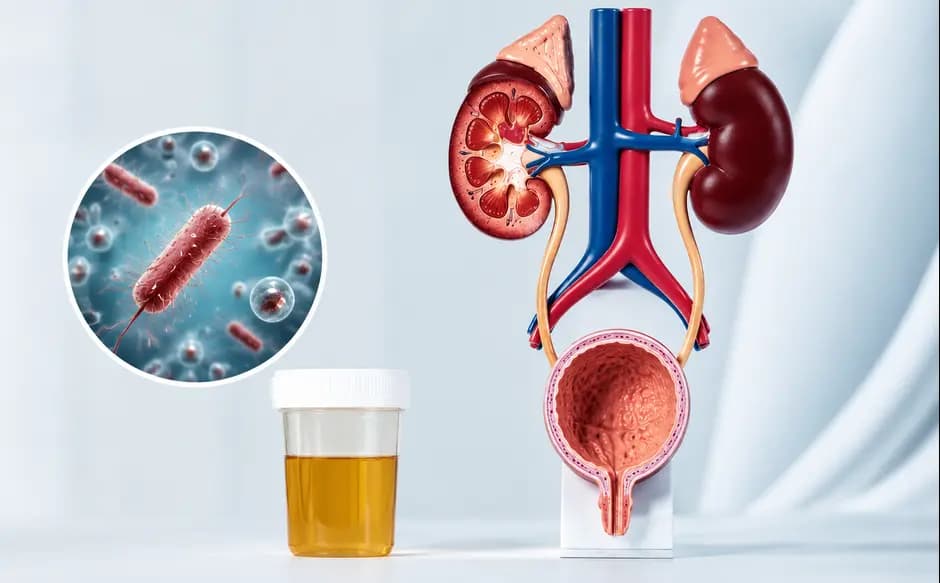

A sudden, knife-like pain in the back or side that comes in waves is often how people first discover they have a kidney stone. It's an unglamorous but extremely common problem in India: an estimated 12% of the country's population is expected to develop renal stone disease over their lifetime, and India records close to two million new cases of urinary stone disease every year, according to a case-control study on dietary risk factors published in the Journal of Endourology's affiliated literature on PubMed Central.
Kidney stones are hard mineral deposits that form in your kidneys and can cause severe pain when they move through your urinary tract. If you or a family member has just been told surgery is the next step, the flood of terms, ESWL, RIRS, PCNL, URSL, can feel more confusing than the pain itself.
This guide walks through what each surgical option actually involves, and realistic recovery timelines that will help you make informed decisions about your treatment with confidence.
When Does a Kidney Stone Actually Need Surgery?
Not every stone needs an operation. Stones under roughly 4–5mm often pass on their own within two to four weeks with hydration, pain control, and medication that relaxes the ureter. Surgery becomes the recommended path when:
- The stone is larger than 6–7mm and unlikely to pass naturally
- It is blocking urine flow and causing the kidney to swell (hydronephrosis)
- There's an infection alongside the stone that isn't responding to antibiotics
- Pain is recurrent and no longer controlled by medication
- The stone sits in a location, such as a lower kidney calyx, where it's unlikely to move on its own
- Kidney function is beginning to decline because of the obstruction
This decision is usually confirmed through a KUB ultrasound and, where needed, a non-contrast CT scan (the current gold standard for pinpointing stone size and exact location) before a urologist recommends a specific procedure.
Surgical Options for Kidney Stone Removal
Four procedures account for almost every stone case treated in Indian urology departments today. Each is built for a different stone size, location, and patient profile, there isn't one "best" surgery, only the one that fits your stone.
1. Extracorporeal Shock Wave Lithotripsy (ESWL)
ESWL uses focused shock waves delivered from outside the body to fragment the stone into pieces small enough to pass in urine over the following days. No incision, no scope, and typically no overnight stay is required. It works best for stones under 10mm sitting in the kidney or upper ureter, and is generally avoided for very hard stones (like calcium oxalate monohydrate or cystine stones) or when the stone sits low in the ureter.
2. Ureteroscopy with Laser Lithotripsy (URSL)
A thin scope is passed through the natural urinary passage, no cuts at all, up to the ureter, where a laser fibre breaks the stone into fragments that are either removed with a small basket or left to pass naturally. URSL is the go-to option for mid- and lower-ureter stones and is often done as a day-care or overnight procedure.
3. Retrograde Intrarenal Surgery (RIRS)
RIRS is essentially URSL taken one step further: a flexible ureteroscope is guided all the way up into the kidney itself, allowing the surgeon to reach stones sitting inside the kidney's collecting system without any external incision. It's frequently chosen when ESWL has failed, when the patient is obese (which limits shock-wave accuracy), or when the stone sits in a part of the kidney that's hard to target from outside the body.
4. Percutaneous Nephrolithotomy (PCNL) and Mini-PCNL
For stones larger than 2cm, staghorn-shaped stones that fill much of the kidney's collecting system, or cases where other methods have failed, PCNL is usually the recommended route. A small tract is created directly into the kidney through the back, and a nephroscope is passed through it to break up and clear the stone in a single session. Mini-PCNL uses a narrower tract and smaller instruments than traditional PCNL, which has been associated with less bleeding and a shorter hospital stay for suitably sized stones.
5. Open Surgery, Now a Last-Resort Option
Traditional open stone surgery, once the default for large or complex stones, is now reserved for rare situations, extremely large staghorn stones, unusual kidney anatomy, or cases where minimally invasive equipment isn't suitable. Most urology centres in India today, including Rameshwara Healthcare's endo-urology unit, aim to manage stone disease through scope-based or percutaneous techniques precisely to avoid the longer recovery that open surgery involves.
| Procedure | Best Suited For | Incision | Typical Hospital Stay |
|---|---|---|---|
| ESWL | Stones < 10mm, kidney/upper ureter | None | Same day (outpatient) |
| URSL (laser) | Mid/lower ureter stones | None (scope via natural passage) | Day-care or 1 night |
| RIRS | Kidney stones up to ~2cm, ESWL failures | None (flexible scope) | 1–2 nights |
| PCNL / Mini-PCNL | Stones > 2cm, staghorn stones | Small (~1cm) back incision | 2–4 nights |
| Open Surgery | Rare complex/large staghorn cases | Traditional surgical incision | 5–7 nights |
Minimally Invasive vs Traditional Surgery
Modern urology strongly favours minimally invasive approaches whenever clinically appropriate. Here is how current treatment modalities compare:
| Factor | Minimally Invasive (ESWL, Ureteroscopy) | Traditional Surgery (PCNL, Open) |
|---|---|---|
| Incisions | None or very small | Larger surgical incision |
| Anaesthesia | Local, regional, or light general | General anaesthesia |
| Hospital stay | Outpatient or overnight | 2-5 days |
| Recovery time | 1-2 weeks | 3-6 weeks |
| Pain level | Mild to moderate | Moderate to significant |
| Success rates | 70-95% depending on stone type | 95%+ for complex stones |
| Infection risk | Very low | Low but slightly higher |
| Return to work | 1-2 weeks | 4-6 weeks |
Minimally invasive procedures reduce tissue trauma, bleeding, and infection risk while enabling faster recovery. However, PCNL remains the gold standard for very large or complex stones where other methods may be insufficient. Your urologist will balance stone characteristics against your health status and recovery preferences to recommend the best approach.
Recovery Timeline After Stone Removal
Recovery speed depends almost entirely on which of the four procedures was used. Here's a realistic, day-by-day expectation for each:
| Procedure | Back to light activity | Full recovery | Follow-up scan |
|---|---|---|---|
| ESWL | 24–48 hours | 3–7 days | 2 weeks (confirm stone clearance) |
| URSL (laser) | 2–3 days | 1–2 weeks | 2–4 weeks |
| RIRS | 3–5 days | 2 weeks | 4 weeks (with stent removal if placed) |
| PCNL / Mini-PCNL | 1–2 weeks | 3–4 weeks | 4–6 weeks |
| Open Surgery | 3–4 weeks | 6–8 weeks | 6–8 weeks |
A detail patients often aren't warned about: mild burning during urination, small traces of blood, and dull flank discomfort for a few days after a scope-based procedure (URSL/RIRS) are normal, particularly if a temporary ureteric stent has been placed to keep the passage open while it heals. The stent itself is usually removed in a quick, five-minute outpatient procedure 1–3 weeks later.


Post-Operative Care and Pain Management
Proper post-operative care accelerates healing and prevents complications. In the immediate aftermath, avoid strenuous activity, heavy lifting, and vigorous exercise as directed by your surgeon, usually for 1 to 6 weeks depending on the procedure. Drink plenty of water unless instructed otherwise, as hydration helps flush remaining stone fragments and prevents new stone formation.
Pain is managed with prescribed oral analgesics; contact your doctor if pain worsens or becomes unbearable despite medication. Fever, persistent nausea, heavy bleeding, or inability to urinate are warning signs requiring prompt medical attention.
If a ureteric stent was placed, you will have a follow-up appointment for its removal. Avoid sexual activity and strenuous exercise until your surgeon gives clearance, typically 1 to 2 weeks after minimally invasive procedures and 4 to 6 weeks after PCNL.
Dietary adjustments and increased fluid intake help prevent recurrence. Routine follow-up imaging ensures stone-free status and detects any new formations early.
Preventing Stone Recurrence After Surgery
Surgery clears the stone that's causing symptoms today, it doesn't change the underlying metabolic or dietary tendency that formed it in the first place. Recurrence risk climbs steadily with time: published data on renal calculi patients shows a 10% recurrence rate within the first year after a stone forms, rising to 35% by the fifth year, 50% by the tenth year, and as high as 75% by twenty years.
Practical steps that consistently reduce recurrence risk, per general urology guidance, include:
- Drinking enough water to produce at least 2–2.5 litres of urine a day, the single most evidence-backed prevention step.
- Reducing salt intake, which directly increases urinary calcium excretion.
- Moderating animal-protein intake rather than eliminating it outright.
- Getting stone composition analysed after removal, calcium oxalate, uric acid, struvite, and cystine stones each call for a different prevention diet.
- Following up with urine and blood tests periodically if you've already had one stone, since a first stone roughly doubles the likelihood of a second.
When to Seek Specialist Care
If you experience severe flank pain, blood in urine, fever, or inability to urinate, seek urgent medical evaluation. Kidney stones can occasionally cause serious complications like infection within an obstructed system (pyonephrosis) or acute kidney injury.
A urologist can confirm the diagnosis with imaging such as a CT scan or ultrasound and recommend the most appropriate treatment based on the stone's size, location, and your overall kidney health.
Choosing a hospital that offers comprehensive diagnostics, multiple minimally invasive treatment options, and experienced urologists can make the entire treatment process faster and more convenient. Here's how Rameswara Healthcare approaches kidney stone care and supports patients from diagnosis through recovery.
How Rameswara Nursing Home Approaches Kidney Stone Care
Rameswara Nursing Home, a NABH-accredited 200-bed multispecialty hospital in Kolkata, offers comprehensive kidney stone care through its dedicated urology and nephrology team. Treatment is tailored to the patient's stone size, location, and overall kidney health, with minimally invasive procedures available when intervention is required.
Why patients choose Rameswara Nursing Home:
- 11-member urology and nephrology team experienced in managing simple and complex stone disease.
- Complete in-house diagnostics, including USG (KUB), urine tests, kidney function tests, digital X-ray, and pathology for faster evaluation.
- Advanced endourology procedures such as ESWL, URSL, RIRS, and PCNL, reducing the need for open surgery.
- 24/7 emergency care, ICU support, and an in-house dialysis unit for complicated stone cases.
- Cashless treatment with major insurance providers and appointment coordination for outstation and international patients.
This integrated approach enables quicker diagnosis, personalised treatment, and seamless care under one roof.
Conclusion
Kidney stone surgery today is far removed from the open operations of a generation ago, most stones, regardless of size, can now be treated through a scope or a small percutaneous tract, with recovery measured in days rather than weeks for the majority of cases.
The right procedure depends entirely on your stone's size, location, and composition, which is why an accurate ultrasound or CT reading, reviewed by an experienced urologist, matters more than any single "best" technique.
If you're dealing with a stone diagnosis, whether you're based in Kolkata, elsewhere in India, or planning a treatment trip from the Gulf, getting that imaging reviewed early is the most useful next step you can take.
Chat with our care assistant or reach out to our urology team directly to get your imaging reviewed and understand your options.
Medical Disclaimer: This article is intended for general informational purposes only and does not constitute medical advice, diagnosis, or treatment recommendations. Kidney stone treatment decisions should always be made in consultation with a qualified urologist based on individual imaging, medical history, and stone characteristics. Costs, timelines, and procedure availability mentioned here are indicative and may vary by hospital, city, and case complexity.