
Polycystic kidney disease affects roughly 1 in 400 people worldwide, yet many remain unaware of their condition until significant kidney damage occurs. This inherited disorder causes fluid-filled cysts to develop in the kidneys, gradually impairing their ability to filter waste. Understanding how the disease develops, why it runs in families, and what management options exist can help you take control of your kidney health and prevent serious complications.
What Is Polycystic Kidney Disease?
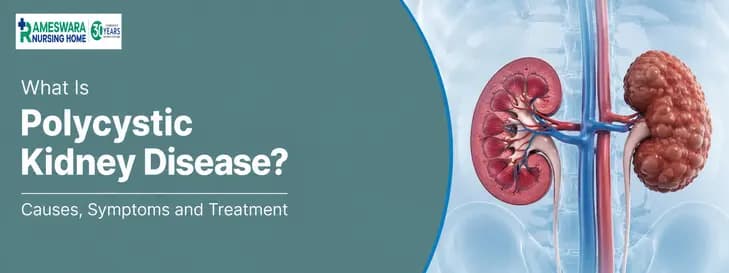
Polycystic kidney disease is a genetic disorder in which fluid-filled sacs, called cysts, grow inside the kidneys. Unlike the small, harmless cysts many people develop with age, PKD cysts multiply steadily over the years. As they grow, they push against healthy kidney tissue, enlarge the kidneys well beyond their normal size, and gradually reduce the kidneys' ability to filter waste from the blood.
PKD is different from a simple kidney cyst in one crucial way: it is inherited, meaning it is caused by a mutation in specific genes passed down through a family, and it almost always affects both kidneys rather than one. In more advanced cases, cysts can also form in the liver, pancreas, or other organs, which is why PKD is managed as a whole-body condition rather than a kidney-only diagnosis.
Types of Polycystic Kidney Disease
Doctors classify PKD into two inherited forms, plus a third, non-inherited condition that is sometimes confused with it.
1. Autosomal Dominant PKD (ADPKD)
ADPKD is by far the most common type, responsible for the vast majority of PKD cases. It is caused by a mutation in the PKD1 or PKD2 gene, and a child needs only one affected parent to have a 50% chance of inheriting it. Symptoms typically surface between ages 30 and 50, though cysts may be present long before symptoms appear. PKD1 mutations tend to cause earlier, faster-progressing disease, while PKD2 mutations are usually milder and slower to progress.
2. Autosomal Recessive PKD (ARPKD)
ARPKD is rare and far more serious in infancy. It requires both parents to carry the mutated gene and is often identified during pregnancy ultrasounds or shortly after birth. Because it affects kidney development itself, ARPKD can also cause liver scarring and, in severe newborn cases, breathing difficulties.
3. Acquired Cystic Kidney Disease (ACKD)
ACKD is not genetic. It develops in people who already have long-term kidney damage or have been on dialysis for several years. It is mentioned here only to avoid confusion, the treatment approach for ACKD differs from inherited PKD.
Symptoms of Polycystic Kidney Disease
PKD is often called a "silent" disease in its early years because cysts can grow for a long time before causing noticeable symptoms. When symptoms do appear, they usually include:
-
Dull or sharp pain in the back, side, or abdomen
-
High blood pressure, often the earliest detectable sign
-
Blood in the urine (haematuria)
-
Frequent urinary tract infections
-
A feeling of fullness or a visibly enlarged abdomen
-
Kidney stones and the colicky pain that comes with them
-
Headaches, sometimes linked to associated brain aneurysms
-
Fatigue and swelling in the legs as kidney function declines
What Causes Polycystic Kidney Disease?
PKD is caused by mutations in specific genes, mainly PKD1 and PKD2 for ADPKD, and PKHD1 for ARPKD. These genes are responsible for proteins that keep the tubes inside the kidney (renal tubules) structured correctly. When the gene is faulty, tubule cells multiply abnormally and form fluid-filled cysts instead of normal, functioning tissue.
Because PKD is genetic, it cannot be prevented through diet or lifestyle. However, family history is one of the strongest diagnostic clues: if a parent, sibling, or child has confirmed ADPKD, genetic counselling and periodic kidney ultrasounds are recommended even before symptoms appear.
How Is PKD Diagnosed?
Diagnosis usually starts with an ultrasound, which can detect cysts from a relatively young age, especially when there is a known family history. When ultrasound results are inconclusive, doctors move to CT or MRI scans, which pick up smaller cysts with greater accuracy.
Genetic testing is used selectively, for younger patients with an unclear family history, for those considering living kidney donation, or for confirming a diagnosis before starting disease-modifying medication such as tolvaptan.
Once PKD is confirmed, doctors also check blood pressure, kidney function through blood and urine tests (creatinine, eGFR), and sometimes imaging of the liver and blood vessels, since PKD can involve cysts elsewhere and a slightly higher risk of brain aneurysms in some ADPKD patients.
What Helps With Polycystic Kidney Disease? Treatment & Management Options
There is currently no cure for PKD, but that does not mean patients are without options. Modern nephrology focuses on slowing cyst growth, protecting remaining kidney function, and managing complications early, and this combination is what genuinely helps with polycystic kidney disease over the long run.
1. Blood pressure control
High blood pressure both results from and accelerates PKD-related kidney damage, making it the single most important factor doctors control. ACE inhibitors and ARBs are the first-line medications, usually paired with reduced salt intake.
2. Tolvaptan for rapidly progressing ADPKD
Tolvaptan, approved for adults with ADPKD at risk of rapid progression, is the only medication currently shown to slow cyst growth and kidney function decline. It requires regular liver function monitoring because of a known risk of liver injury.
3. Pain and infection management
Pain relief is tailored carefully, since many common painkillers can be hard on already-stressed kidneys. Urinary tract infections and kidney stones, both common in PKD, are treated promptly to prevent further kidney scarring.
Also Read: UTI Symptoms in Women: What to Watch For & When to Seek Help
4. Cyst aspiration or sclerotherapy
For a single large, painful cyst, doctors can drain the fluid and sometimes inject a solution to prevent it from refilling. This eases pain but does not change the disease's long-term course.
5. Dialysis
As kidney function declines toward failure, dialysis takes over the blood-filtering role the kidneys can no longer perform. Data from a Phase 2 clinical trial registry shows that roughly half of people with the more aggressive ADPKD gene mutation reach end-stage kidney disease by age 60, which is why dialysis planning often begins well before an emergency.
6. Kidney transplant
For eligible patients with end-stage PKD, a kidney transplant, from a living or deceased donor, offers the best long-term quality of life and removes the need for regular dialysis sessions. Transplant candidacy depends on overall health, cardiovascular fitness, and donor availability.


Diet and Lifestyle Tips for Managing PKD
While diet cannot reverse cyst growth, the following habits genuinely reduce strain on PKD-affected kidneys and are consistently recommended by nephrologists:
-
Limit sodium to reduce blood pressure and fluid retention
-
Stay well hydrated, unless your nephrologist advises fluid restriction in advanced CKD
-
Moderate protein intake to ease the kidneys' filtering workload
-
Avoid or limit caffeine, which may encourage cyst fluid secretion in some studies
-
Maintain a healthy weight through regular, kidney-safe physical activity
-
Quit smoking, which independently accelerates kidney function decline
-
Avoid NSAID painkillers unless specifically cleared by your doctor
Cost of PKD-Related Treatment: What to Expect
Treatment costs for PKD vary enormously depending on the stage, routine monitoring is inexpensive, while dialysis and transplant carry substantial long-term costs. For context, kidney transplant costs across major Indian hospitals typically range from roughly ₹5 lakh to ₹15 lakh (about $7,000–$18,000), which is significantly lower than comparable procedures in Western countries.
| Type of care | Approximate cost in India | Frequency |
|---|---|---|
| Nephrology consultation & ultrasound monitoring | Low; typically a few thousand rupees per visit | Every 3–12 months depending on stage |
| Blood pressure & pain management (medication) | Ongoing, moderate monthly cost | Continuous |
| Dialysis (per session) | Moderate per-session cost; adds up over months | 2–3 times weekly once required |
| Kidney transplant | ₹5–15 lakh approx. nationally | One-time, plus lifelong post-transplant care |
Why Choose Rameswara Nursing Home for PKD Care in Kolkata
A genetic, lifelong condition like PKD is easiest to manage when diagnosis, monitoring, and complication care happen under one roof, without patients having to coordinate between separate labs, dialysis centres, and consultants. This is where Rameswara Nursing Home, a NABH-accredited, 50-bed hospital in Ultadanga, Kolkata, has built a focused nephrology and urology practice.
The hospital's Urology & Nephro department has 11+ senior consultants, including Dr. Kaushik Chandra Mullick, Dr. Nabankar Ghosh, Dr. Priyatosh Dey, Dr. P. S. Mukherjee, Dr. Sanjoy Dasgupta, and Dr. Sandeep Gupta, covering everything from initial PKD diagnosis to long-term disease monitoring.
A few specifics that matter directly for PKD patients:
-
In-house USG-KUB imaging to detect and track kidney cysts without outside referrals
-
An in-house pathology lab and digital X-ray for routine kidney function and complication monitoring
-
A dedicated dialysis unit for patients who progress to kidney failure
-
A structured 5-step care pathway, consultation, assessment, diagnostics, treatment, and scheduled follow-up, so PKD monitoring doesn't fall through the cracks between visits
-
Cashless insurance and TPA empanelment, which matters for a condition that requires years of ongoing care
For a disease that is managed rather than cured, this kind of continuity, the same nephrology team following a patient's kidney function over years, is often more valuable than any single procedure.
Conclusion
Polycystic kidney disease is a lifelong condition, but "lifelong" does not mean unmanageable. The evidence is clear: early blood pressure control, appropriate medication where eligible, a kidney-conscious diet, and consistent monitoring can meaningfully slow its progression and delay, sometimes significantly, the need for dialysis or transplant. What matters most is not any single treatment but the discipline of staying with one nephrology team that tracks your kidney function year after year. Whether you were just diagnosed or have been managing PKD for years, the right specialist relationship, like the one
Rameswara Nursing Home's Urology & Nephro department offers in Kolkata, can be the difference between reactive crisis care and a proactively managed condition.
Chat with our care assistant for quick guidance, or to book a consultation with Rameswara Nursing Home's nephrology team to get a personalised monitoring and treatment plan.
Medical Disclaimer: This article is for general informational purposes only and is not a substitute for professional medical advice, diagnosis, or treatment. Always consult a qualified nephrologist or physician regarding any questions about polycystic kidney disease or your specific health condition.