
That first stab of pain under the ribs, or a dull ache that won't sit still, for most people, it's the first sign of a kidney stone, and the first question that follows is simple: will this pass on its own, or do I need a doctor?
The honest answer is: it depends almost entirely on size. Understanding your stone size, symptoms, and when to seek professional help is crucial for managing this condition safely.
This guide breaks down exactly which stones pass naturally, how long it realistically takes, the warning signs that mean you shouldn't wait, and where to go for care.
What Are Kidney Stones and How Do They Form
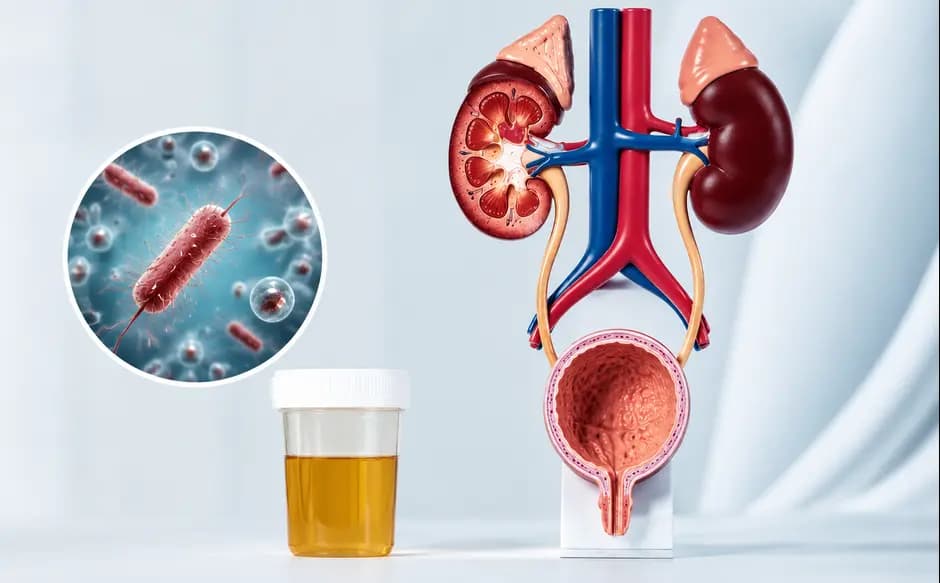
Kidney stones are hard mineral deposits that form inside your kidneys when certain chemicals in your urine become too concentrated. They develop gradually as these minerals crystallize and stick together, eventually forming solid masses. The most common types are calcium oxalate stones, followed by uric acid, struvite, and cystine stones.
Risk factors include dehydration, a diet high in sodium and animal protein, family history, certain medical conditions like gout, and certain medications. Men are more likely to develop kidney stones than women, and people between 30 and 50 years old face the highest risk.
Stones can vary greatly in size, from tiny crystals invisible to the naked eye to larger masses that cause severe obstruction. Understanding what type of stone you have and its size is essential for determining whether it can pass naturally or if you need treatment.
What Decides Whether a Kidney Stone Passes on Its Own
Three things determine whether your body can clear a stone without intervention: size, location, and shape/composition.
Size is the single biggest factor
The ureter, the tube carrying urine from kidney to bladder, is only about 3 to 4mm wide at its narrowest point (Doctronic, Kidney Stone Size Chart). Anything close to or larger than that width has to stretch the ureter to move, which is what causes the classic wave-like pain of renal colic.
Location in the urinary tract
A stone located in the lower ureter, especially at the ureterovesical junction (where the ureter enters the bladder), is more likely to pass on its own than one higher up near the kidney. A landmark CT-based study found spontaneous passage rates of about 79% for stones at the ureterovesical junction, compared with 48% for stones in the proximal ureter, showing that stone location influences the likelihood of natural passage.
Shape and composition
A smooth, round stone slides through more easily than a jagged one, even at a similar size. Softer uric acid stones can also break apart naturally during passage, while harder calcium oxalate stones, the most common type in Indian patients, tend to hold their shape.
Kidney Stone Size Chart: Chance of Natural Passage
| Stone Size | Chance of Passing Naturally | Typical Time to Pass |
|---|---|---|
| Under 4mm | ~80% | ~31 days |
| 4mm–6mm | ~60% | ~45 days |
| Above 6mm | ~20% | Up to 12 months (surgical removal usually advised) |
Symptoms That Tell You a Stone Is Moving
- Sharp, wave-like pain in the back or side that radiates to the lower abdomen or groin
- Pain that shifts position as the stone travels down the ureter
- Burning sensation while urinating
- Pink, red, or brown-tinged urine (blood in urine)
- Nausea or vomiting during pain episodes
- A sudden urge to urinate frequently, even in small amounts
When a Kidney Stone Will NOT Pass on Its Own
Stop waiting and seek same-day medical care if you notice:
- Fever or chills alongside stone pain, this can mean infection behind a blocked kidney, which can become dangerous quickly
- Inability to pass urine at all
- Pain so severe you can't sit still, work, or sleep, despite medication
- Persistent vomiting that prevents you from staying hydrated
- A stone larger than 6-7mm confirmed on imaging
- Pregnancy, or having only one functioning kidney, both change the risk calculation significantly


What You Can Safely Do While Waiting for a Stone to Pass
For small, uncomplicated stones under active medical supervision, doctors commonly advise:
- Drinking enough water to keep urine pale yellow through the day
- Taking prescribed pain relief rather than pushing through pain untreated
- Straining urine through a cloth or strainer to catch the stone for lab analysis once it passes
- Staying moderately active, gentle movement can help a stone's downward progress
- Avoiding self-medicating with unprescribed alpha-blockers or high-dose painkillers
Medical Treatment Options if Stones Do Not Pass
When a stone is too large, positioned awkwardly, or causing complications, urologists typically choose from:
- Medical Expulsive Therapy (MET): Medication that relaxes the ureter to help a borderline-size stone pass on its own
- Extracorporeal Shock Wave Lithotripsy (ESWL): Non-invasive shock waves break the stone into passable fragments
- Retrograde Intrarenal Surgery (RIRS): A scope-based, no-incision procedure using a laser to fragment stones inside the kidney
- Percutaneous Nephrolithotomy (PCNL): A keyhole procedure for very large or complex stones
- Ureteroscopy with stent placement: Used for stones stuck in the ureter, often combined with a temporary stent to keep urine flowing
Most patients today never need traditional open surgery, the shift toward scope-based and laser techniques has made recovery considerably faster.
If your stone requires specialist treatment, the next step is choosing a hospital with experienced urologists, advanced minimally invasive technology, and comprehensive follow-up care.
Also Read: Kidney Stone Removal: Surgical Options and Recovery Timeline
Is Rameswara Nursing Home the Right Place for Kidney Stone Care?
Kidney stone treatment is not just about removing the stone, it also involves identifying its cause, preserving kidney function, preventing recurrence, and managing any underlying conditions that may contribute to stone formation.
At Rameswara Nursing Home, these aspects are handled through an integrated Urology & Nephrology department within a NABH-accredited multi-specialty hospital. Patients have access to advanced diagnostics, endourology services for minimally invasive stone removal, experienced urologists, nephrologists, anaesthesiasts, and critical care support under one roof.
The hospital also offers insurance-backed treatment, dedicated inpatient care, and structured follow-up with metabolic evaluation and dietary counselling to help reduce future stone episodes.
If you're considering Rameswara Nursing Home for kidney stone treatment, these are some of the questions patients commonly ask before making a decision.
Is it a specialised urology hospital or a general one? It's a NABH-accredited multi-specialty hospital in Ultadanga, Kolkata, with a dedicated Urology & Nephrology department staffed by 11+ senior consultants. That combination matters for kidney stones specifically, because stone disease often overlaps with related concerns, hypertension, diabetes, or existing kidney function issues, that benefit from having cardiology, nephrology, and general medicine on the same campus rather than a standalone stone clinic.
What does the actual care pathway look like? On-site USG-KUB imaging, urine analysis, and kidney function tests are used to size and locate the stone precisely, with same-day reporting in most cases. From there, the urology team decides between watchful waiting, medical expulsive therapy, or a scope-based/laser procedure, the hospital's endo-urology setup is built for minimally invasive stone clearance rather than defaulting to open surgery.
Why does this matter for patients travelling from the Gulf? For Gulf-based Indian families, a kidney stone diagnosis often means choosing between a costly local procedure and travelling home for treatment. Kolkata has direct flight connectivity from major Gulf hubs, and procedures like RIRS or PCNL in India typically cost a fraction of equivalent private treatment in the UAE, Saudi Arabia, or Qatar. Rameswara's billing desk handles insurance pre-authorisation and cashless processing with major TPAs, which simplifies planning a short medical visit around the procedure and recovery window.
Is the cost actually transparent, or is that just marketing language? The hospital publishes a tariff schedule rather than quoting on request, and works with a long list of empanelled insurers (Bajaj Allianz, HDFC ERGO, Niva Bupa, Star Health-linked TPAs like Medi Assist and FHPL, among others) for cashless admission where eligible. For self-pay patients, having a published tariff upfront, rather than a hospital-specific quote after consultation, is one of the more useful things to check for before committing to a location.
What about follow-up, since stones tend to recur? Because Rameswara is a full multi-specialty hospital rather than a single-visit stone clinic, follow-up imaging, dietary counselling, and metabolic evaluation to reduce recurrence risk are handled within the same urology OPD, useful for patients who want one point of contact rather than being referred elsewhere for prevention care.
Preventing the Next Kidney Stone
Because recurrence rates climb the longer someone goes without addressing the underlying cause, prevention isn't optional once you've had one:
- Aim for pale-yellow urine as a hydration marker, especially in hot or humid climates
- Reduce sodium and animal-protein-heavy meals if you've had calcium oxalate stones
- Limit oxalate-rich foods (spinach, nuts, chocolate) if advised after stone composition analysis
- Get a metabolic work-up after a first stone rather than waiting for a second one
- Don't skip follow-up imaging even after symptoms resolve, a stone can be present without pain
Conclusion
Most kidney stones, especially those under 4mm, do pass on their own, usually within a month, with basic supportive care and medical supervision. But "usually" isn't "always," and the size cut-offs matter: once a stone crosses roughly 6mm, or once fever, blockage, or unmanageable pain appear, waiting stops being the safer choice.
The only reliable way to know which category your stone falls into is imaging and a proper urology assessment, not guesswork based on how the pain feels. Whether you're seeking care locally in India or planning a visit from the Gulf, getting an accurate size and location reading early is what actually determines how straightforward your recovery will be.
The experienced urology team at Rameswara Nursing Home offers comprehensive evaluation, advanced minimally invasive stone removal, and personalised prevention strategies, all under one roof. Whether you're seeking a second opinion, planning treatment from another city, or travelling from the Gulf, the team can help you understand your options and choose the most appropriate treatment.
Chat with our medical assistant at Rameswara Nursing Home today to receive a personalised kidney stone treatment plan and take the first step toward lasting relief.
Medical Disclaimer: This article is for general informational purposes only and does not constitute medical advice, diagnosis, or treatment. Kidney stone size, symptoms, and risk vary by individual, and only a qualified physician can assess your specific condition through examination and imaging. If you are experiencing severe pain, fever, or difficulty urinating, seek emergency medical care immediately.